I Thought I Was Volunteering. I Left Seeing My Community Differently.
By Harper Wise
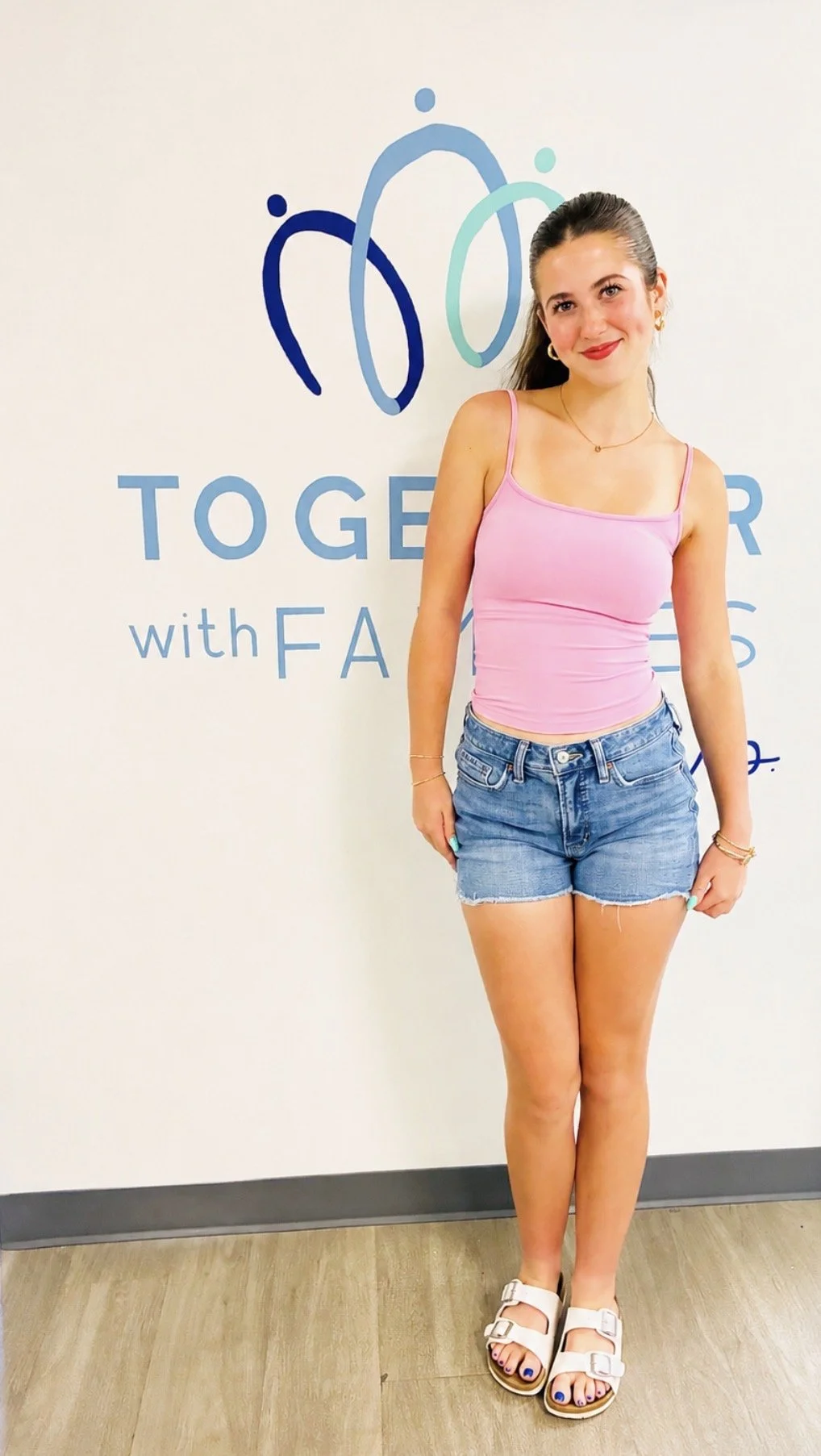
Hi, my name is Harper, and I have been interning at the Together with Families Hub every Wednesday over summer break.
From 10am to 2pm., I gather new information and new perspectives. From organizing cabinets and sorting clothes to helping with social media and tutoring a single father’s ambitious daughter, every day at the Hub brings something new.
This experience has opened my eyes to struggles happening in our own community. Families are living in their cars, moving in and out of hotels or staying in homeless shelters. People you interact with every day may be experiencing homelessness or food insecurity without you ever knowing.
Instead of looking away, find ways to help. Support a local nonprofit, donate if you are able or offer your time. Every little bit makes a difference.
I learned that helping begins with understanding. Volunteering helped me understand.
Without local nonprofits and communities stepping in, many families have a much harder time finding stability.
If you stay on the same street your whole life, you will never have a different view.
I learned more about homelessness, poverty and foster care during my eight weeks volunteering at the Together with Families Hub than I had in the rest of my life.
If there is one thing I recommend, not only to teenagers but to adults as well, it is to volunteer. Step outside your comfort zone. You will not regret it.
Below is an interview between Sarah Winograd, founder and executive director of Together with Families, and me. I asked questions I gathered during my time volunteering, and she gave incredible answers.
I am so grateful to have had this experience, and I am already counting down until next summer. I hope this interview answers some of your questions about Together with Families, just as it answered mine.
An Interview With Sarah Winograd
Harper: What led you to start this organization?
Sarah: I was a court-appointed special advocate in the Cobb County Juvenile Court, so I advocated for the best interests of children in foster care.
I saw that many children were being separated from their families because of poverty. That broke my heart as a parent.
Harper: What has been your favorite part of growing your organization?
Sarah: I think my favorite part is seeing families who came to us years ago now serving other families and growing into leadership positions.
I also love seeing them maintain their stability and continue to grow.
Another favorite is seeing people like you, Harper come in as an intern. You are learning, raising awareness and sharing what you have learned with other people who can help our community.
Harper: How did you build this organization from the ground up?
Sarah: It is a long story, but the short version is that it started as a grassroots effort in my basement.
It was my neighbors and families like yours donating supplies and helping meet families’ basic needs. My basement was filled with donations, and we were also helping with financial assistance. It was truly neighbors helping neighbors.
The work later became a program under another nonprofit. A friend of mine, Kay Lynn Mayhue, helped seed that program.
In 2023, we launched Together with Families as an independent nonprofit because we needed the freedom to advocate and tell the truth about families’ experiences with the child welfare system.
Harper: What advice would you give someone who wants to start a nonprofit?
Sarah: Do not try to do it alone.
First, learn what your community actually needs. Just because you want to do something does not necessarily mean it is what your community needs.
Get to know the people you want to support because they will give you the best insight into what they need and where the gaps are.
Then bring people along with you.
Nothing we have built would have been possible without our neighbors, volunteers and community.
Make sure you are solving a real need, and make sure you are building the solution with the people you hope to serve.
Harper: What has been your favorite memory during your time here?
Sarah: I have so many.
One of my favorites is seeing children I knew when they were in foster care back with their families, doing well and healing together.
It reminds me that families can heal. It also reminds me that many families never needed to be separated in the first place.
Harper: Is there anything else you would like people to know?
Sarah: I think about the next generation a lot.
Young people like you are learning things many adults have never had the opportunity to see. That knowledge matters because most people do not know what is happening in the margins of our communities.
When we understand what families are facing, we are better able to make life better instead of harder.
Harper: Thank you so much for sharing your story.
This summer taught me much more than I expected. I came to volunteer, but I left with a different view of my community.
I learned that everyone needs help sometimes. And I learned that everyone can help.
I hope more people, especially other students, will step outside their comfort zones and volunteer. You never know how much it might change someone else’s life, or your own.